


Australian designer labels are among the most consistently in-demand pieces on the preloved market, and buyers who understand why are better placed to shop with confidence and spend wisely. While international luxury houses attract the most attention in resale conversations, Australian labels occupy a distinct and underexamined position: premium enough to hold genuine resale value, specific enough in identity to remain recognisable across seasons and priced at retail in a range that creates real opportunity in the secondhand market.
VENLA resell+relove has processed more than 210,000 preloved items since 2021 across its Sydney stores. The patterns that emerge from that volume are consistent: Australian designer pieces move quickly and command prices that reflect their original quality. Buyers who understand which labels to look for, and why those labels hold value, make better purchasing decisions and get considerably more from each dollar they spend.
This article covers the five factors that determine resale performance, the Australian labels that demonstrate those factors most clearly and what a buyer needs to know before making a purchase.
What Drives Resale Value in Fashion
Resale value is not random, and the difference between a piece that commands 60 per cent of its retail price in the secondhand market and one that fetches 10 per cent comes down to a predictable set of factors. Understanding them helps any buyer evaluate a piece before purchasing, and helps sellers understand why some wardrobe items are worth significantly more than others.
- Construction and material quality. Pieces made from natural fibres, with careful stitching and structural integrity, age better and photograph better, which sustains ongoing buyer demand. A garment that holds its shape and colour after multiple wears retains its appeal in the secondary market in a way that a fast fashion equivalent cannot.
- Brand recognition and cultural relevance. A label that buyers actively search for generates competition at resale. Awareness drives price, and consistent awareness over time drives consistent price. Labels with strong visual identity, loyal customer bases and ongoing media presence maintain searchability in the secondary market.
- Restraint in design. Pieces built around clean lines, measured palettes or signature prints that transcend a single season resist becoming dated. A tailored blazer from a label known for precision will look as relevant in five years as it does today. A piece tied to a specific micro-trend will not.
- Controlled production volume. Labels that do not flood the market with product create scarcity in the secondary market, which supports resale pricing over time. When buyers see a desirable piece rarely, demand concentrates.
- Retail price point. A higher original retail price creates a wider acceptable resale range. A $600 dress purchased preloved for $250 represents clear value to the buyer and a meaningful return for the seller. That logic does not apply to a $40 fast fashion equivalent. The starting point of the price anchor matters.
Australian Labels With Strong Resale Performance
The eight labels below represent consistent performers in the Australian preloved market. Each paragraph leads with what a buyer needs to know most, followed by guidance on which pieces hold value and what to look for when purchasing.
Zimmermann
Zimmermann is the benchmark Australian label in the global preloved market and the most actively searched Australian designer on international resale platforms. Its pieces are identifiable on sight: the prints, the broderie anglaise detailing and the structured silhouettes create a visual distinctiveness that translates directly into searchability and consistent buyer demand across seasons. Founded in 1991 by Nicky and Simone Zimmermann, the label has built sustained international recognition that few Australian designers have matched, and that recognition drives resale competition. Buyers should prioritise pieces in clean condition, paying close attention to print integrity and fabric quality. Zimmermann textiles are often delicate and sun damage or wear to printed sections is visible and reduces value. At VENLA resell+relove, preloved Zimmermann pieces attract strong interest and move quickly. Buyers who find the right piece at the right price should not hesitate.
Scanlan Theodore
Scanlan Theodore holds its value because it resists trends. Founded in 1987, the label has built a long-standing reputation for precise tailoring, quality jersey fabrication and a restrained colour palette that means its pieces remain wearable and relevant across multiple seasons without signalling a particular year. A Scanlan Theodore blazer purchased in 2019 does not look like a 2019 blazer. That is a meaningful quality in the preloved market.
Blazers, tailored trousers and dresses perform best at resale. A Scanlan Theodore blazer purchased preloved represents particularly strong value: it reads as expensive, ages without effort and works across a broad range of professional and social occasions. Buyers evaluating Scanlan Theodore pieces should check seam integrity and lining quality, as the tailoring is the product.
Aje
Aje occupies a strong position in the mid-to-premium preloved market because its retail price point is accessible to a wider buyer base than labels like Zimmermann, which sustains ongoing demand. Founded in 2009, the label has built a clear identity around textile-led design: broderie anglaise, eyelet construction, strong structural shapes and an earthy, natural palette that ages well in the wardrobe.
Linen and broderie pieces, along with tailored midi dresses, perform particularly well in the Sydney preloved market. Buyers should look for pieces in good condition with no fraying on broderie detail, as that type of wear is difficult to ignore and reduces resale appeal significantly. Aje buyers at VENLA resell+relove tend to know the label well and shop with intent.
Rebecca Vallance
Rebecca Vallance produces pieces with a clear identity: structured occasionwear, cocktail dresses and formal separates made with quality fabrication and consistent sizing. That specificity works in favour of the label at resale. Buyers searching for a reliable, well-made event dress often turn to Rebecca Vallance preloved precisely because the label delivers predictable quality without the unpredictability of trend-driven occasionwear.
Midi dresses, tailored co-ordinates and formal eveningwear hold value most reliably. Because occasionwear is worn less frequently, preloved Rebecca Vallance pieces are often in excellent condition, which further supports price. Buyers should check zip function and fabric tension, as structured garments place higher demands on these elements.
Camilla
Camilla operates differently from the labels above, but the resale logic is equally strong. Founded in 1998, the label has built a devoted collector base that actively seeks specific print programs in the secondhand market. Its bold, maximalist prints are highly identifiable and carry a distinct cultural identity that sustains continued interest among buyers who know the label well. Camilla is not a casual purchase at resale; it attracts informed, committed buyers.
Kaftans, robes and silk separates from sought-after print programs perform best. Condition matters more than usual with Camilla: the print is the product, and any fading or wear is immediately visible to an informed buyer. Buyers should check for colour consistency across the full garment and assess silk quality carefully before purchasing.
Sass and Bide
Sass and Bide built its reputation on tailored denim and statement pieces, and nostalgia for the label sustains real secondhand demand. Founded in 1999, the label reached considerable cultural height in Australia during the 2000s and early 2010s, and buyers who followed its rise continue to seek out pieces from that era in the preloved market. Its denim, embellished jackets and signature cuts remain recognisable and desirable.
Earlier archive pieces attract the strongest resale interest, though more recent seasons also perform well for buyers who approach the label without nostalgia. Buyers should check denim for wear at stress points and assess embellishment integrity on statement pieces before purchasing.
Carla Zampatti
Known for its timeless elegance and sophisticated tailoring, Carla Zampatti is one of Australia’s most recognised fashion brands. The label is celebrated for flattering silhouettes, luxurious fabrics and effortless pieces that make women feel confident and polished. From perfectly tailored blazers and sleek eveningwear to modern wardrobe staples, Carla Zampatti’s style is classic, feminine and designed to last beyond seasonal trends.
Known for elegant tailoring, luxurious fabrics and styles that never date, Carla Zampatti pieces are designed to last for years — making them perfect to buy preloved. At VENLA, buyers can discover unique, high-quality pieces that are often no longer available in stores, while also making a more sustainable fashion choice by giving beautiful designer garments a second life.
Bianca Spender
Bianca Spender has built a loyal following among buyers who prioritise cut above all else. Founded in 2009, the label has developed a clear identity around precision tailoring, and its trousers and blazers are consistently regarded as among the best-made Australian pieces at their retail price point. That reputation translates directly into strong resale interest from buyers who know what they are looking for.
Tailored trousers, blazers and structured dresses hold the most resale value. A Bianca Spender trouser purchased preloved at half its retail price is a considered purchase that performs across professional and casual occasions over many seasons. Buyers should assess cut and lining quality, as the tailoring is what the label is known for.
You can also discover Australian brands such as Toni Maticevski, Hansen & Gretel, Matteau, St Agni and much more whn you brows VENLA racks.
Australian Designers vs Fast Fashion
The resale gap between Australian designer labels and fast fashion is structural, not marginal. Fast fashion is priced for single-season use, produced at high volume and constructed to a cost. Those decisions compound against resale value in ways that careful storage or good condition cannot reverse. When a Zara dress reaches the secondhand market, it arrives without brand equity, without scarcity and without the quality signals that drive buyer competition.
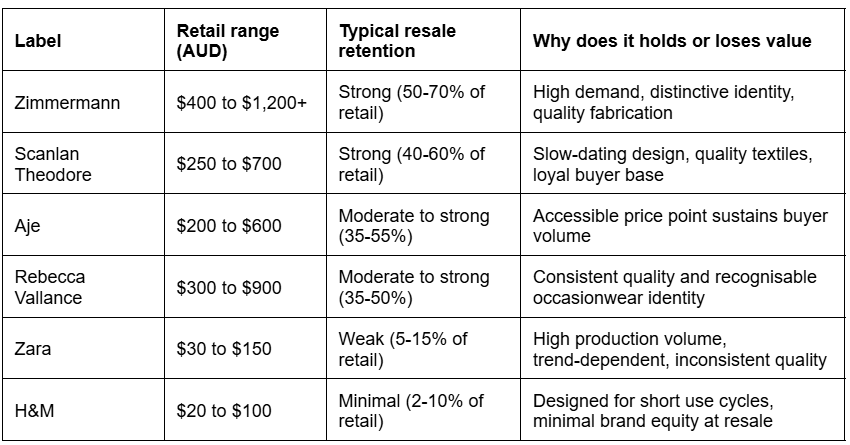
The table above reflects directional patterns observed across the Australian preloved market. Individual pieces vary based on condition, colourway, seasonality and buyer demand at the time of sale. The retention figures are not guarantees but represent consistent observable patterns.
The financial case becomes clearer when net cost is considered rather than purchase price. A Zimmermann dress purchased preloved at $350 and resold two seasons later for $200 carries a net cost of $150 for the full period of ownership. A Zara dress purchased new at $89 and sold preloved for $8 carries a net cost of $81, from a fraction of the original outlay. When per-wear cost is calculated across the ownership period, the investment purchase wins consistently.
Buyers who approach preloved Australian designer fashion as a considered purchase consistently pay less per wear than those who cycle through fast fashion at its apparent low cost. That pattern compounds over time and has a measurable environmental benefit alongside the financial one.
How to Buy Australian Preloved Designer Pieces With Confidence
Buying preloved Australian designer fashion well requires attention to three things: condition, authenticity and price. All three are assessable before purchase, and understanding each reduces the risk of a poor buying decision to near zero.
Condition is the primary driver of resale value and the first thing a buyer should assess. Check fabric for pilling, fading and structural wear. On printed pieces, including Zimmermann and Camilla, look for colour consistency across the full garment. On tailored pieces from Scanlan Theodore or Bianca Spender, check seams, zip function and lining integrity. A piece in genuinely good condition warrants a higher price and will retain more value if sold again in future. Buyers who pass on a well-priced piece in excellent condition because of minor price sensitivity often regret the decision.
Price assessment requires a small amount of research but is straightforward in practice. Check the current retail price of the piece on the official label website, then review comparable preloved listings on platforms such as Vestiaire Collective or eBay AU to calibrate a fair secondhand figure. A well-priced preloved piece from a reputable retailer typically sits at 40 to 60 per cent of retail for recent-season stock in good condition. Older seasons and pieces with minor wear may sit lower, and that is reasonable. The key is knowing the retail anchor before negotiating or committing.
The Case for Preloved Australian Fashion
Australian fashion labels hold their value in the preloved market because they are built to last and designed to be recognised. The same qualities that justify their retail prices, including construction integrity, distinctive visual identity and design restraint, translate directly into secondhand demand. Buying preloved from labels like Zimmermann, Scanlan Theodore, Aje or Rebecca Vallance is not a compromise. It is a considered decision that delivers well-made fashion at a better effective cost than fast fashion new, with a substantially lower environmental footprint.
The secondhand market for Australian designers is active, growing and well supplied. Buyers who understand how it works shop it with confidence and build wardrobes that deliver real and lasting value.
Browse preloved Australian designer labels at VENLA resell+relove, with stores in Manly, Balmain and Mosman. Explore the VENLA Luxe collection for authenticated preloved designer accessories.

%20(1).jpg)
.avif)


